Uncategorized

SaaS Marketing Agency in India

Best SaaS Marketing Agency in India

SaaS Marketing Agency in India, SaaS marketing is the promotion of subscription-based software to attract users and keep them engaged over the long term. It focuses on driving user acquisition, product adoption, and reducing churn, unlike traditional marketing which often focuses on one-time sales. Your SaaS product deserves customers who need it. But without specialized marketing expertise, even the most innovative solutions remain invisible in today’s competitive digital landscape. The Indian SaaS ecosystem has matured dramatically. Revenue expectations have shifted from basic customer acquisition to sustainable growth models. Marketing strategies that worked in 2023 are now obsolete as Google’s algorithms prioritize experience, expertise, authority, and trustworthiness above all else. This comprehensive guide reveals exactly what separates high-performing SaaS marketing agencies in India from agencies that drain budgets without delivering measurable pipeline growth. Whether you’re a bootstrapped startup or a funded scale-up, these insights will transform how you approach B2B marketing in 2025. Why SaaS Companies in India Need Specialized Marketing Expertise Software-as-a-Service businesses operate under fundamentally different parameters than traditional product or service companies. Your revenue model depends on recurring subscriptions, not one-time transactions. Sales cycles involve multiple decision-makers across technical, financial, and operational roles. Your customer lifetime value calculations directly impact how much you can spend acquiring each user. Standard digital marketing agencies lack this specialized knowledge. They apply generic tactics across all industries, resulting in misaligned messaging, poor conversion rates, and unsustainable customer acquisition costs. A dedicated SaaS digital marketing agency India understands subscription economics intimately. They structure campaigns around your specific metrics—monthly recurring revenue, churn rates, expansion revenue, and net revenue retention. They know that generating 1,000 free trial signups means nothing if only 12 convert to paid plans. The distinction matters financially. SaaS companies working with specialized agencies typically achieve 40-60% lower customer acquisition costs compared to those using generalist marketing firms. The reason is simple: every strategy aligns with subscription business fundamentals rather than forcing traditional marketing frameworks onto incompatible business models. [Get Your Free SaaS Marketing Audit — Discover Exactly Where You’re Losing Qualified Leads] The 2025 SaaS Search Landscape: SaaS Marketing Agency in India Google’s search algorithm underwent significant transformations throughout 2024, fundamentally altering how SaaS companies must approach organic visibility. Three major shifts dominate the current landscape: AI Overviews and Zero-Click Searches Google now generates AI-powered summaries directly in search results for approximately 65% of informational queries. Users obtain answers without clicking through to websites. For SaaS companies, this means traditional content strategies focused solely on informational keywords no longer drive meaningful traffic. The adaptation requires targeting high-intent commercial and transactional queries where AI Overviews don’t appear. Searches like “best project management tool for remote teams pricing” or “CRM software free trial for startups” still generate clicks because users need specific product information and comparison data. E-E-A-T as Ranking Foundation Experience, Expertise, Authoritativeness, and Trustworthiness now serve as Google’s primary quality evaluation framework. Content written by actual SaaS practitioners, backed by real implementation data and case metrics, ranks higher than generic marketing copy. This shift favors Indian SaaS marketing experts who demonstrate genuine industry knowledge through detailed technical content, transparent methodologies, and verifiable results. Surface-level blog posts with basic tips no longer compete effectively. Intent-Driven Search Dominance Google’s algorithm has become exceptionally sophisticated at understanding search intent. It distinguishes between someone researching concepts (“what is marketing automation”) versus someone ready to purchase (“marketing automation software demo booking”). SEO services for SaaS India must now align content precisely with user intent stages. Educational content targets awareness-stage prospects. Comparison content addresses consideration-stage buyers. Product-specific landing pages convert decision-stage visitors. Search Intent Type Example Query Required Content Format Conversion Potential Informational “How does sales automation work” Educational blog, guide Low (awareness stage) Commercial Investigation “Best sales automation tools 2025” Comparison page, reviews Medium (consideration) Transactional “HubSpot sales automation pricing” Pricing page, demo CTA High (decision stage) Navigational “[Brand name] login portal” Direct page access Existing customers Core Services Every High-Performance SaaS Marketing Agency Must Deliver Effective SaaS marketing requires integrated expertise across multiple specialized domains. Agencies offering fragmented services or limited channel expertise cannot deliver comprehensive growth results. Strategic SEO for SaaS Visibility: SaaS Marketing Agency in India A competent SaaS SEO agency for startups India implements technical optimization, content strategy, and authority building simultaneously. Technical audits identify crawling issues, page speed problems, and structural deficiencies that suppress rankings. Content strategy targets high-value keywords aligned with your ideal customer profile and buying journey stages. Authority building through strategic link acquisition establishes domain credibility. The objective extends beyond traffic generation. SEO services for SaaS India should focus on ranking for keywords that actual decision-makers search when evaluating solutions in your category. This requires deep understanding of buyer personas, their research patterns, and terminology they use during evaluation processes. Performance Marketing Across Paid Channels Performance marketing for SaaS India encompasses precise paid advertising across Google Ads, LinkedIn, and retargeting platforms. Unlike broad awareness campaigns, performance marketing ties every rupee spent directly to pipeline metrics. Google Ads for SaaS India campaigns target high-intent keywords with commercial and transactional intent. Ad copy addresses specific pain points and clearly communicates unique value propositions. Landing pages optimize for conversion rather than information delivery. LinkedIn ads for SaaS India reach decision-makers based on job titles, company size, industry, and seniority. This precision targeting proves particularly valuable for B2B SaaS companies where purchases involve multiple stakeholders. LinkedIn’s professional context also establishes immediate credibility that other platforms cannot match. SaaS PPC agency India expertise ensures proper campaign structure, negative keyword management, bid optimization, and continuous A/B testing. Poor PPC management burns budgets rapidly with minimal return—a luxury early-stage startups cannot afford. Content Marketing That Converts Content serves multiple functions in SaaS marketing. It builds organic search visibility, establishes thought leadership, nurtures prospects through extended sales cycles, and reduces customer acquisition costs by creating evergreen lead generation assets. Effective content strategy requires understanding your audience’s sophistication level and information needs at each funnel stage. Top-of-funnel content addresses broad industry challenges and educational needs. Middle-funnel

Best SaaS Marketing Agency in India Read More »
SEO for Accounting Firms

SEO for Accounting Firms

SEO for accounting firms involves optimizing online presence to attract new clients through strategies like local SEO, keyword research, high-quality content, and technical optimization. Key steps include fully optimizing your Google Business Profile, targeting local search terms, creating blog content that answers client questions, building backlinks, and ensuring your website is fast, mobile-friendly, and secure.  Why SEO Matters for Accountants Today Tax season doesn’t start when clients walk through your door anymore. It starts three months earlier when they type “best CPA near me” into Google at 11 PM on a Sunday. The accounting industry has fundamentally shifted. Your future clients are researching, comparing, and deciding on firms entirely online before making contact. Without strategic SEO for accountants, you’re simply not part of that decision-making process. Appear Exactly Where Clients Are Searching Every month, thousands of business owners and individuals search for accounting services in your city. They’re typing phrases like “CPA for small business,” “tax preparation near me,” or “accounting firm for startups.” These aren’t casual browsers—these are people with urgent financial needs and money to spend. Local SEO for accountants ensures your practice appears when these high-intent searches happen. Google’s local pack (those three businesses that appear with map listings) captures 44% of all clicks for local searches. If you’re not there, your competitors are collecting those leads. Build Trust Before Clients Even Speak to You Here’s something most accountants miss: prospects read an average of 7 pieces of content before contacting a firm. Your Google ranking serves as a trust signal. Appearing on page one tells potential clients, “This firm is established, credible, and worth considering.” When implemented properly by an accounting SEO agency, your online presence becomes a 24/7 trust-building machine. Informative blog posts answering tax questions, detailed service pages explaining your expertise, and positive client reviews all work together to pre-qualify leads before they reach out. Attract High-Quality, Ready-to-Convert Leads Not all leads are equal. Someone searching “free tax advice” versus “CPA firm for business tax planning” represents vastly different intent and value. Sophisticated SEO for CPA firms targets bottom-of-funnel keywords—search terms used by people ready to hire. These prospects aren’t shopping around for information; they’re shopping for a firm. The result? Your phone rings with qualified leads, not tire-kickers asking about your hourly rate. Strategic keyword targeting delivers: Higher conversion rates (typically 3-5x better than paid ads) Lower cost per acquisition Clients who value expertise over price Sustainable growth that compounds monthly Compete With Larger Firms Big Four firms and national chains have massive marketing budgets. They can’t be beaten on spending—but they can absolutely be outmaneuvered with smart local SEO for accountants. Local search levels the playing field. When someone in your neighborhood searches for accounting services, Google prioritizes proximity and relevance over brand name. A well-optimized local practice can rank above regional competitors spending ten times more on marketing. Small and mid-sized firms using professional SEO services for accountants consistently outrank larger competitors in their local markets because they optimize for the searches that matter: “[their city] CPA firm,” “accountant near [neighborhood],” “small business bookkeeping [town].” How SEO for Accounting Firms Actually Works Let’s cut through the technical jargon and break down exactly how accounting firm search engine optimization generates clients. Finding the Right Keywords Everything starts with understanding what your ideal clients actually search for. This isn’t guessing—it’s data-driven research that reveals exactly which phrases bring in revenue. Effective keyword research for accounting firms targets three categories: High-Intent Service Keywords (people ready to hire): “CPA firm for S-corp tax filing” “business accounting services [city]” “tax preparation for small business near me” “accounting firm for startups” Local Geographic Keywords (capturing local search): “accountant in [neighborhood]” “best CPA [city name]” “[town] tax services” “bookkeeping services near [landmark]” Long-Tail Problem-Solving Keywords (building trust early): “how to reduce business tax liability” “when should I hire a CPA for my business” “difference between bookkeeper and accountant” “quarterly estimated tax calculation help” The most successful CPA firm SEO services don’t just identify keywords—they map them to your client journey. Awareness-stage searches get blog content, consideration-stage searches get detailed service pages, and decision-stage searches get optimized landing pages with clear calls-to-action. Keyword Type Search Intent Content Format Conversion Potential Service + Location High (Ready to hire) Service landing page Excellent (8-12%) Problem-Solving Medium (Researching) Blog post/guide Moderate (2-4%) Branded Very High (Seeking you specifically) Homepage/About page Excellent (15-25%) Comparison Medium-High (Narrowing options) Service comparison page Good (5-8%) Ready to discover which keywords are bringing clients to YOUR competitors? A comprehensive keyword audit reveals the exact search terms driving traffic to top-ranking firms in your area—and how to outrank them. On-Page SEO: Making Your Website Clear & Helpful On-page optimization is where keyword research transforms into rankings. It’s the art and science of structuring your website so both search engines and humans understand exactly what you offer. Critical on-page elements for accounting firm websites: Title Tags That Command Clicks: Your title tag (the blue clickable headline in search results) must include your target keyword and location while compelling clicks. Compare these: Weak: “Accounting Services | ABC Accounting” Strong: “Dallas CPA Firm | Small Business Tax & Accounting Experts” Meta Descriptions That Sell: While not a direct ranking factor, your meta description is advertising copy that determines click-through rate. Include your primary keyword, a clear benefit, and a call-to-action: “Full-service CPA firm serving Austin small businesses since 2010. Tax planning, bookkeeping, and CFO services that reduce liability and maximize growth. Free consultation—call (512) 555-0100.” Header Tags That Structure Content: H1, H2, and H3 tags organize your content hierarchically while signaling topic relevance to Google. Each service page needs exactly one H1 (your main headline with keyword) and logical H2/H3 subheadings. Body Content That Demonstrates Expertise: Here’s where accountant website SEO optimization separates amateurs from experts. Your service pages need: Minimum 800-1,200 words of unique, valuable content Natural keyword integration (2-3% density) Clear explanations of services, processes, and benefits Trust signals (credentials, experience, specializations) Strong calls-to-action every 300-400 words Internal

SEO for Accounting Firms Read More »

Website Development Agency

Website Development Agency For Luxury Travel Brands

Website Development Agency, a high-end luxury travel brand requires a website development agency that understands the art of visual storytelling, seamless user experience, and sophisticated branding. In the elite world of luxury travel, your online presence is your brand’s front-door. A generic template site simply won’t cut it. High-net-worth travelers expect sophistication, exclusivity, seamless experience and style—so you must deliver a digital gateway that reflects the prestige of your services. That’s where partnering with a specialist luxury travel website development agency becomes critical. When you choose to work with a team that understands “website development for luxury travel brands”, you: Signal that you value quality, not shortcuts. Enable you to showcase your brand as bespoke, premium, exclusive. Create the environment where wealthy clients feel comfortable making high-ticket bookings online. Gain a strategic partner who understands luxury travel brand web development services, not just “travel websites.” Think of the online experience as a luxury resort: every detail—from the hero image to the micro-interaction—matters. Your website should convey trust, authority, and refinement at first glance, because your audience has high expectations.  Ready to elevate your brand’s digital experience? Get in touch now for a luxury travel brand website consultation and discover how we can transform your online presence.   Understanding the Luxury Travel Market & Target Audience Before writing any line of code or signed contract, you must deeply know your market and your audience. For a high-end travel business, this is far different from a budget or mid-market travel site. Market Insights 2025 The luxury travel segment continues to grow, with affluent travelers seeking exclusive experiences, customized itineraries, privacy, authenticity, and digital ease. According to recent guides, designing for luxury means understanding how high-end travelers think: they expect personalization, seamless tech, immersive storytelling and brand consistency. In SEO for luxury travel, it is emphasized that brands must define what “luxury” means to them, then align content, UX and messaging accordingly. Target Audience – High-Net-Worth Travelers When building a bespoke website for luxury travel, keep these audience insights in mind: Affluent travelers: They care about prestige, exclusivity, service, and seamless digital/person-to-person transitions. Behavior: They research online, but also expect quick personalized responses, and trust signals like testimonials, awards and rich media. Expectations: High-quality visuals, impeccable UX, smooth booking workflows, and a brand narrative that aligns with their lifestyle. Decision-making: They don’t go for bargain deals; they go for exceptional experiences. The website must reflect that. Why This Matters for Website Development If your website is generic, slow, lacks personality or just “looks like everyone else’s”, you risk losing credibility. The digital touchpoint becomes a barrier rather than a gateway. Choosing a development agency that specializes in “high-end travel brand website development” ensures the platform is aligned with this audience and market. Key Features of a High-End Website for Luxury Travel Feature Why It Matters Key Implementation Notes Responsive & Mobile-First Design Many affluent travelers browse on mobile. A glitch frees them to a competitor. Ensure mobile UI is flawless, hero image sets tone, navigation is smooth. High-Quality Visuals & Rich Media Luxury sells through emotion and aspiration. Use large format images, full-screen video backgrounds, immersive galleries. Seamless Booking & Payment Integration High-ticket bookings need trust, clarity, fewer friction points. Secure payment gateway, clear pricing, simplified form, live chat support. User-Friendly Navigation & Filtering Luxury clients expect ease and speed. Intuitive menu, sticky CTAs, search filters based on interest/length/style. Storytelling & Brand Narrative The site must reflect your brand’s unique luxury story. Dedicated “Our Story” page, immersive destination content, testimonials. SEO & Performance Optimization Even luxury sites need to be found and load fast. (SEO Travel) Ensure fast load times, optimized images/video, schema for FAQs & bookings. Scalability & Architecture Luxury brands grow; platform must support high traffic and features. Choose technology stack that supports headless CMS, micro-services, easy updates. Trust Signals & Social Proof Affluent users expect authority, reliability and service excellence. Include awards, press mentions, client testimonials, partner logos.   Unique Points for Luxury Travel Brand Websites A custom website design for luxury travel brands (not a generic travel theme). A bespoke website design luxury travel company will personalize UI/UX, color palette, typography and brand asset integration to reflect the high-end positioning. Integration with luxury tour operator website development modules: e.g., VIP concierge flows, private-jet options, bespoke itineraries, curated experiences. High conversion website for luxury travel bookings: fewer distractions, exclusive CTAs, VIP-only messaging, sense of urgency or limited availability. Elevate Your Brand With a Website That Truly Converts High-Ticket Bookings?   Choosing the Right Technology & Platform Picking the right tech stack and platform is crucial for a luxury travel brand website—one that must perform, scale, and look exceptional. CMS vs Headless vs Custom Build Traditional CMS (e.g., WordPress, Drupal): There are benefits, but for luxury travel brands you may outgrow templates or face performance limitations. Headless CMS / Decoupled Architecture: Offers flexibility in front-end presentation, ultra-fast loading, and supports multiple channels. Custom Build / Microservices: Best for high-traffic brands, global bookings, complex integrations. Research shows microservices frameworks boost scalability and performance. Booking Integration & Platform Scalability Your site must integrate with booking engines, payment systems, customer portals, CRM, analytics, and more: Real-time availability, dynamic pricing, VIP status, custom packages. Platform must scale for peaks (luxury clients often book near closing dates). Technology stack should allow future growth (new regions, languages, channels). Technology Stack Example for Luxury Travel Website Front-end: React / Next.js for dynamic, performant UI. Back-end: Node.js or Python micro-services for booking, CRM integration. CMS: Headless (e.g., Concertful, Strapi) for flexibility in content. Database & APIs: Scalable, secure, GDPR-compliant. Cloud Hosting: AWS/Azure with CDNs for global performance. Analytics & Optimization: Google Analytics 4, Hotjar, A/B testing. SEO & Schema: FAQ schema, Travel Agent schema, structured data for bookings. Why Choosing the Right Platform Matters If your platform is slow, inflexible, or fails visually, you risk undermining the premium positioning. A luxury user expects flawless design, fast experience, and high-end service—if your website feels cheap or basic, you lose

Website Development Agency For Luxury Travel Brands Read More »

PPC vs SEO

PPC vs SEO

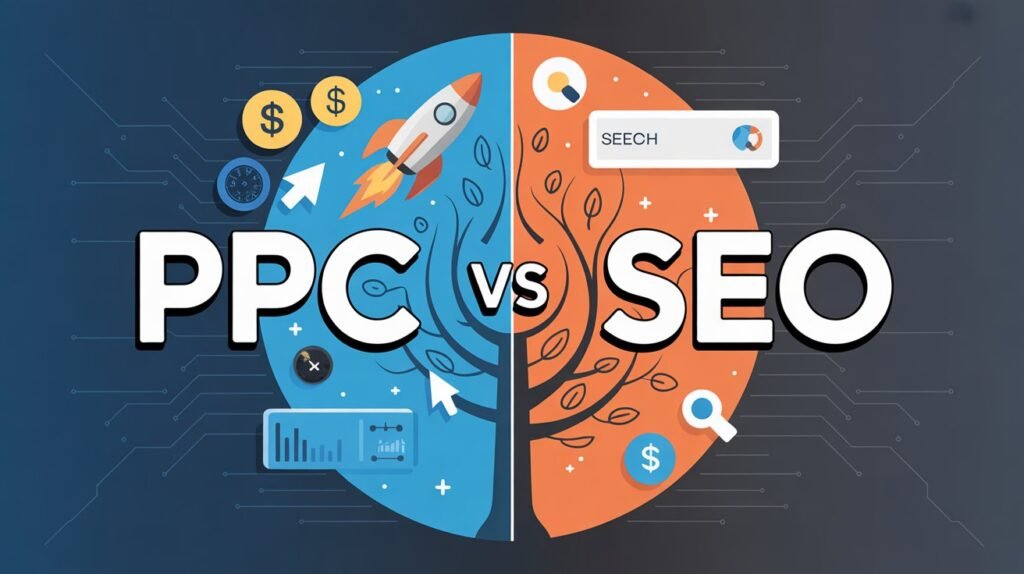
PPC vs SEO PPC (pay-per-click) offers immediate, paid visibility and is ideal for short-term goals, while SEO (search engine optimization) provides long-term, organic traffic and is more cost-effective in the long run. PPC (Pay-Per-Click): You pay Google every time someone clicks your ad. Think of it as renting traffic. SEO (Search Engine Optimization): You optimize your website to rank organically. Think of it as owning traffic. What is SEO? Your Long-Term Digital Asset Understanding Search Engine Optimization Search Engine Optimization (SEO) is the art and science of making your website irresistible to Google’s algorithms. When done right, your business appears at the top of search results without paying for each click. Think of SEO as building a permanent digital storefront on the busiest street in India—except this street has 700 million potential customers. The 3 Pillars of SEO Success: PPC vs SEO 1. On-Page SEO: Making Your Content Shine On-page SEO is everything you control directly on your website. This includes optimizing content with relevant keywords that Indian customers actually use when searching. For example, instead of just “accounting services,” you’d optimize for “chartered accountant for small business in Mumbai” or “GST filing services near me.” Your content needs to answer real questions. Meta titles and descriptions must be compelling enough to earn clicks. Headers should be structured logically, and internal links should guide visitors through your website naturally. 2. Off-Page SEO: Building Your Digital Reputation This is about building authority beyond your website. Quality backlinks from trusted Indian websites act as votes of confidence for your business. When The Economic Times or YourStory mentions your brand, Google takes notice. Brand mentions across the internet, social signals, and local citations all contribute to your online reputation. Guest posting on relevant platforms establishes you as an industry expert. 3. Technical SEO: The Foundation That Holds Everything Technical SEO ensures Google can crawl, understand, and index your website efficiently. This includes lightning-fast page speed (critical when 80% of Indian users browse on mobile with varying internet speeds), mobile responsiveness, secure HTTPS connections, and structured data markup that helps search engines understand your content. Core Web Vitals compliance isn’t optional anymore—Google uses these metrics to rank websites. Your site needs to load quickly, respond immediately to user interactions, and maintain visual stability. SEO for Indian Business Owners: PPC vs SEO Operating in India comes with unique advantages and challenges that smart business owners leverage: Mobile-First Reality: Over 450 million Indians access the internet exclusively through smartphones. Your SEO strategy MUST prioritize mobile experience. If your website takes more than 3 seconds to load on a 4G connection, you’re losing customers before they even see your content. Multilingual Opportunity: Here’s a secret most businesses miss—SEO in Hindi, Tamil, Bengali, Marathi, and other regional languages is massively underserved. While everyone fights for English keywords, you can dominate regional language searches with far less competition and higher conversion rates. Local Search Goldmine: “Near me” searches in Indian languages have grown 200% since 2023. When someone in Indore searches for “best coaching classes near me” in Hindi, you want to be the first result. Local SEO can help you dominate your market without competing nationally. Voice Search Revolution: Indian users are rapidly adopting voice search in their native languages. Instead of typing “best restaurants,” they’re asking, “Mere paas sabse accha restaurant kaunsa hai?” Optimizing for these conversational queries gives you a massive competitive advantage. Timeline, Budget & Expected Results Let’s talk real numbers—no fluff, just facts. Investment Required: Small business: ₹15,000 – ₹40,000 per month (basic SEO with content creation) Medium business: ₹40,000 – ₹1,00,000 per month (comprehensive SEO with link building) Enterprise: ₹1,00,000+ per month (aggressive SEO with multiple campaigns) Timeline to Results: Initial improvements: 2-3 months (you’ll start seeing movement) Significant traffic growth: 4-6 months (noticeable increase in visitors) Competitive rankings: 6-12 months (first page for target keywords) Market dominance: 12-24 months (owning your industry search terms) Expected ROI: Studies show SEO delivers an average ROI of 748% for businesses that stick with it long-term. The key word? Long-term. SEO is not a sprint; it’s a marathon that pays dividends for years. Ready to build a sustainable traffic machine that works 24/7? Let’s talk about your SEO strategy What is PPC? Your Fast-Track to Visibility Understanding Pay-Per-Click Advertising PPC is like placing a billboard on India’s busiest digital highway—Google Search. The difference? You only pay when someone actually interacts with your billboard (clicks your ad). In 2025, PPC isn’t just about text ads anymore. It’s a sophisticated ecosystem that includes search ads (when people actively look for solutions), display ads (visual banners across millions of websites), shopping ads (product images with prices), video ads on YouTube, app promotion ads, and local service ads for businesses like plumbers, electricians, and consultants. The Core Components of Successful PPC 1. Keyword Bidding Strategy You compete with other businesses for valuable search terms. In India’s competitive markets like education, real estate, healthcare, and finance, clicks can cost anywhere from ₹50 to ₹500 or more. The key is bidding smartly—not necessarily highest. Google rewards relevance. If your ad and landing page perfectly match what the searcher wants, you’ll pay less per click than competitors with bigger budgets but poor relevance. 2. Compelling Ad Formats Your ad has exactly 3 seconds to capture attention among dozens of competing messages. Winning ads include powerful headlines with numbers and urgency (“Save 40% Today Only”), clear value propositions that differentiate you from competitors, strong calls-to-action that tell people exactly what to do, and ad extensions like phone numbers, locations, and customer reviews that build trust. 3. High-Converting Landing Pages Here’s where most businesses waste money: They drive traffic to their homepage instead of a dedicated landing page. Your ad is only half the battle. The landing page must load in under 2 seconds (crucial for mobile India), match the ad’s promise exactly (if your ad says “50% off,” the landing page better show that offer immediately), have a crystal-clear call-to-action, build trust with

PPC vs SEO Read More »

Benefits of Google Ads

Benefits of Google Ads: 5 Powerful Reasons to Advertise in 2025

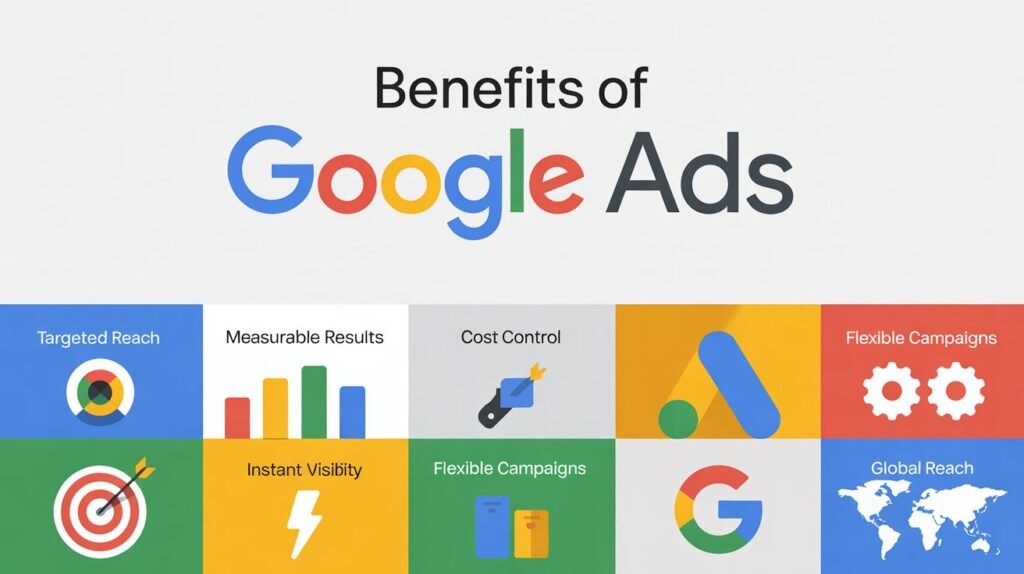
Benefits of Google Ads in 2025. It boosts your brand visibility instantly, helping you appear in front of high-intent customers right when they’re searching. Unlike SEO, which takes months, Google Ads delivers fast and predictable results. You can target highly specific audiences based on keywords, location, interests, and behavior—ensuring your ads reach the right people at the right time. Every campaign is fully measurable, allowing you to track clicks, conversions, and ROI with precision. Plus, Google Ads increases both leads and sales by showing your ads across the entire Google ecosystem, including Search, YouTube, Gmail, Display, and Maps—driving traffic online and directly to physical stores. Benefits of Google Ads. What Makes Google Ads Essential for Indian Business Owners in 2025? What are the benefits of Google Ads? Simple answer: Your business shows up instantly when customers search for what you sell, with smart technology improving results while you focus on running your business. Is Google Ads still effective? Walk into any successful business in your city. Ask how they get customers. Eight out of ten will mention Google Ads. The platform delivers qualified leads faster than any other marketing channel. Why Google Ads is important breaks down to three non-negotiables: You reach people ready to buy, you track every rupee spent, and artificial intelligence optimizes campaigns automatically without needing technical knowledge. How Google Ads works for small businesses couldn’t be simpler. Set your budget. Choose keywords customers search. Write ads. Google’s technology handles the complex optimization that used to require experts. Is Google Ads good for leads? Numbers don’t lie. Indian businesses consistently report earning ₹7-15 for every rupee invested once campaigns hit their stride after the first month. Your competitors are capturing customers this very moment. Will you watch or will you compete? 1. Introduction: Why Every Indian Business Owner Needs Google Ads in 2025 Digital transformation isn’t coming to India—it’s already here. Your customers abandoned phone directories years ago. They stopped waiting for newspaper ads. They’re not asking neighbors for recommendations anymore. They’re searching Google at midnight comparing options. Reading reviews. Checking prices. Making decisions before your shop opens the next morning. Instagram reach? Collapsed to 6-8% of followers. Facebook business pages? Even worse. WhatsApp Business works beautifully—after people find you. But how do they discover your business initially? Google Ads marketing benefits have leveled the playing field completely. A small electronics shop in Nashik competes with chains in Mumbai. A boutique law firm in Chandigarh attracts clients across Punjab. A manufacturing unit in Coimbatore reaches buyers pan-India—without spending lakhs on traditional advertising. Search intent changes everything. Someone typing “urgent printer repair in Gurgaon” needs your service now. They’re not browsing casually. They’re ready to hire whoever appears first with good reviews and clear pricing. Google Ads advantages 2025 go deeper than visibility. Artificial intelligence learns from every click, adjusting targeting and bids to squeeze maximum value from your budget. The system optimizes campaigns round the clock without human intervention. For business owners juggling operations, finances, inventory, and customer management, Google Ads for small businesses delivers something priceless: marketing that runs itself. Set it up properly once, and the technology handles daily optimization. The brutal reality? Your competition isn’t waiting. While you’re calculating whether ₹15,000 monthly investment makes sense, they’re already capturing every high-intent customer searching for services you both offer. By the time you decide, they’ve locked in relationships you’ll spend months trying to break. Benefit 1: Instant Visibility When Customers Search With Serious Buying Intent Picture this: Someone in your city types “bulk stationery supplier near me” at 3 PM. Your ad appears first. They click. They call within minutes. You close a ₹50,000 order by evening. That’s not wishful thinking. That’s benefits of advertising on Google working for Indian businesses thousands of times daily. Why Intent Separates Winners From Losers Traditional advertising throws your message at everyone hoping something sticks. Newspaper ads reach thousands who’ll never need your products. Hoardings get seen by people with zero interest. Television commercials interrupt shows to pitch services viewers don’t want. Why use Google Ads flips this wasteful approach completely. You only pay when people actively searching for your offerings click your ad. Someone searching “company registration services in Jaipur” wants exactly what CA firms offer. Someone typing “industrial mixer suppliers Ahmedabad” is ready to buy equipment, not casually browsing. The intent difference transforms marketing economics fundamentally. Would you rather pay ₹500 to reach 1,000 random people, or ₹500 to reach 50 people actively searching to hire someone like you? The answer becomes obvious when your phone starts ringing. How Indian Customers Actually Search Before Buying Behavior has shifted dramatically. Even traditional industries see customers researching online first. Construction material buyers compare suppliers on Google. Manufacturing units search for equipment vendors. Wholesale traders look up bulk suppliers. Retailers hunt for distributors. B2B transactions now start with search as much as B2C purchases. The factory owner whose machinery breaks down searches for spare parts suppliers immediately. The restaurant owner needing vegetables searches for wholesale vendors. The retailer running low on inventory searches for quick delivery distributors. Google Ads advantages 2025 capture these critical moments when purchase intent peaks: The restaurant owner’s equipment fails at 8 PM—searches “commercial kitchen repair Bangalore urgent” The startup founder needs legal help—searches “trademark registration lawyers Pune affordable” The factory manager runs short on raw materials—searches “chemical suppliers Vadodara same day delivery” The shop owner wants accounting software—searches “best billing software for retail shops India” Your competition relying on referrals misses these opportunities completely. By the time someone asks for recommendations, they’ve already shortlisted three businesses from Google. Smart Technology Understands Regional Searches Better Google’s artificial intelligence has become remarkably good at understanding how Indians actually search. People mix Hindi and English. They use voice search in regional languages. They type the way they speak, not in perfect keywords. Someone searches “mere paas wala best doctor” or “cheap laptop Delhi me kaha milega” and Google’s AI understands the intent, showing relevant ads despite imperfect phrasing. Performance

Benefits of Google Ads: 5 Powerful Reasons to Advertise in 2025 Read More »

Google Ads Agency for B2B SaaS

Choosing a Google Ads Agency for B2B SaaS Companies in India

Google Ads Agency for B2B SaaS , To choose a Google Ads agency for a B2B SaaS company in India, you should prioritize agencies with specific SaaS experience, a proven track record, and expertise in metrics like MQLs, CAC, and MRR. Google Ads Agency for B2B SaaS. Attention, SaaS Founders and Marketing VPs! Are you tired of seeing high click-through rates (CTRs) but a stagnant Monthly Recurring Revenue (MRR)? In the fast-paced, highly competitive Indian B2B SaaS landscape, generic performance marketing simply will not work. The truth? Your company’s biggest growth bottleneck might not be your product—it might be an agency that doesn’t truly understand the SaaS DNA. Choosing a Google Ads Agency for B2B SaaS Companies in India We’ve witnessed countless SaaS businesses—with brilliant products—fail to scale their paid acquisition because they partner with agencies optimized for e-commerce transactions or B2C lead volume. The Hard-Hitting Challenge: B2B SaaS faces unique hurdles: Long Sales Cycles: Your buyer journey isn’t a quick purchase; it’s a 3-to-12-month commitment involving multiple stakeholders. Niche & Granular Targeting: You’re not selling to everyone; you’re targeting a handful of decision-makers with hyper-specific job titles in select industries. Revenue-Based KPIs: You need leads that turn into Sales Qualified Leads (SQLs) and, most critically, MRR, not just cheap form submissions. A specialized Google Ads agency for B2B SaaS in India is no longer a luxury—it’s a critical necessity. This expert partner acts as a tactical extension of your own growth team, armed with the precise Experience and Expertise to navigate the complex world of SaaS lead generation strategy and SaaS paid acquisition. They reverse-engineer the entire revenue journey, from a high-intent search (SaaS PPC agency) to a signed contract. This definitive guide, crafted by an industry veteran, will unlock the exact playbook you need to select a partner who will dramatically reduce CAC for SaaS and deliver exponential, predictable growth.   1. What Makes Google Ads for B2B SaaS Fundamentally Different?   The moment a generalist agency sees a high-volume, low-cost keyword, they jump on it. A B2B SaaS performance marketing agency sees a low Search Intent and a guaranteed waste of budget. This is the crucial difference. In SaaS, we optimize for lead quality over lead quantity.   The Critical Shift in Mindset & Metrics: Google Ads Agency for B2B SaaS    Targeting Decision-Makers, Not General Users: Your Google Ads campaigns must exclusively target the individuals who have the power to sign off on a five-figure annual contract. This requires advanced layering of in-market audiences, Custom Intent Audiences, and precise negative keyword lists. We must eliminate search terms from students, job seekers, and consumers immediately. The MQL → SQL → Pipeline Attribution Imperative: In B2C, a conversion is often the final sale. In B2B SaaS, a conversion is just the start. Your agency must implement closed-loop reporting that connects the original keyword and ad creative directly to the Sales Pipeline and ultimately, the MRR. If they only track form fills, they are failing you. Demand Capture vs. Demand Generation: Demand Capture: Bidding on high-intent keywords like “best CRM for B2B sales teams India” or “SaaS paid acquisition.” The user is actively looking for a solution. This is where the bulk of your initial budget should go. Demand Generation: Creating and promoting content (via Display, YouTube, or Performance Max) to an audience that has the problem but hasn’t started searching for a solution yet. This builds future pipeline and supports SaaS demand generation agency goals. SaaS Marketing Goal B2C/E-comm Marketing Goal Why the Difference Matters KPIs SQLs, MRR, CAC Payback Period Conversions, ROAS, Revenue Success Metric Lead Quality (Fit for Ideal Customer Profile) Lead Quantity (Maximized Volume) Attribution Focus Multi-Touch Funnel (from Click to Pipeline) Last-Click (from Click to Purchase)   2. Reverse Engineering SaaS Growth: The 4 Pillars of a High-Ranking Google Ads Strategy   To achieve the highly coveted MRR growth with Google Ads campaigns, we must adopt a reverse engineering technique. Instead of starting with keywords, we start with the ideal customer profile (ICP) and a revenue target.   Pillar 1: Hyper-Specific ICP Research & Buyer Persona Segmentation   The agency should not ask, “Who is your target?” They should ask, “Show me your most profitable cohort of customers.” The focus must be on finding companies in India that match your ICP in terms of: Industry (e.g., Fintech, Healthcare, Logistics) Company Size (e.g., 50-200 employees) Technology Stack (e.g., using a competitor’s product or a complementary one) This intelligence informs the creation of Customer Match lists, highly relevant Custom Segments, and precise Geo-targeting within India’s key tech hubs like Bengaluru, Pune, and Hyderabad.   Pillar 2: Intent-First Keyword and Funnel Mapping   This is the bedrock of your best Google Ads setup for B2B SaaS products. Every single keyword must be mapped to a stage in the buyer’s journey (Awareness, Consideration, Decision). Funnel Stage Keyword Examples (High Intent) Ad Copy Focus Decision (BOFU) Google Ads agency for B2B SaaS, SaaS PPC agency, “[Your Solution] alternatives” Offer: Book a Demo, Pricing, Urgency: Limited slots, Proof: Case Study/G2 Rank Consideration (MOFU) SaaS lead generation strategy, B2B SaaS Google Ads management, “how to reduce CAC for SaaS” Value: Free Audit, Ebook/Whitepaper, Authority: “Experts in SaaS Growth” Awareness (TOFU) “Why is our sales pipeline empty”, “Best sales process automation tool” Education: Guide to solving the pain point, Trust: Thought Leadership Power Tip: We aggressively use high-intent keywords like “Google Ads agency for B2B SaaS” and competitor terms to capture demand immediately, while simultaneously building out a vast negative keyword list to prevent spend on low-value searches.   Pillar 3: Conversion Funnel Optimization—The Last Mile   A brilliant ad that drives traffic to a mediocre landing page is pure budget waste. The agency must be a Conversion Rate Optimization (CRO) expert. Hyper-Relevance: The landing page headline must match the ad copy and keyword intent precisely. If the ad mentions “MRR Growth,” the landing page must speak to MRR Growth immediately. Reduced Friction: Minimal form fields (3-5 max), clear, compelling value

Choosing a Google Ads Agency for B2B SaaS Companies in India Read More »

Facebook Ads Agency For E-commerce

Facebook Ads agency for high-ticket e-commerce website sales

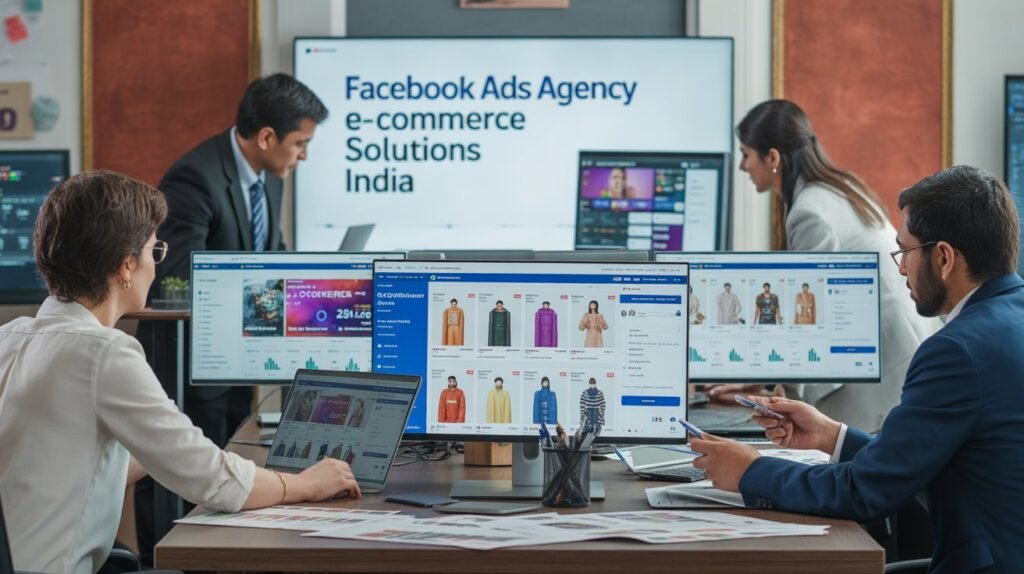
Facebook Ads Agency For E-commerce   Why High-Ticket E-Commerce Brands in India Need Facebook Ads Facebook Ads Agency For E-commerce, selling a ₹2.5 lakh luxury sofa set isn’t the same as moving ₹999 fashion accessories. The moment your average order value crosses ₹40,000, everything changes—your customer’s decision-making process, their research patterns, their objections, and most critically, how you must approach Facebook advertising in the Indian market. I’ve watched brilliant Indian e-commerce founders pour ₹40 lakhs into Facebook ads only to generate a heartbreaking 0.8 ROAS. Not because their products weren’t exceptional. Not because Facebook doesn’t work for Indian audiences. But because they treated high-ticket sales like impulse purchases during Diwali sales. The Challenge of Scaling Expensive Products in India: Facebook Ads Agency For E-commerce. Here’s what nobody tells you about selling premium products to Indian consumers online: Your potential customer will research your brand across 9-15 touchpoints before purchasing. They’ll screenshot your product, send it to family WhatsApp groups, compare you against three competitors, check reviews on multiple platforms, watch unboxing videos on YouTube, abandon their cart twice, and then maybe buy—if you’ve earned their trust and shown genuine value. High-ticket eCommerce marketing in India requires surgical precision. Your profit margins might be healthier, but your customer acquisition cost can spiral into disaster territory without a battle-tested Facebook Ads strategy for eCommerce that accounts for Indian buyers’ extended consideration periods and price sensitivity at premium levels. Why Organic Alone Is NOT Enough for Indian Markets Organic reach on Facebook collapsed to 1.8-3% in India by 2024. Instagram’s algorithm prioritizes reels over product posts. Your beautifully curated content? It’s reaching 250 people when you need 25,000 qualified buyers from metros and Tier-1 cities seeing your ₹1.8 lakh modular kitchen collection. Organic builds credibility among existing followers. Paid advertising builds revenue from new customers. For high-ticket eCommerce scaling strategy in India, you need both—but paid Facebook ads accelerate results by 14-20 months compared to organic-only approaches. Facebook Ads Agency For E-commerce What Makes Facebook Ads Different for High-Ticket Products in India. Understanding Indian Buyer Psychology Someone buying a ₹1,499 kurta set makes emotional, quick decisions during flash sales. Someone investing ₹3.2 lakhs in a luxury bedroom set? They’re extremely risk-averse, detail-oriented, price-conscious despite high income, and skeptical of online marketing claims. Your Facebook Ads for high ticket sales targeting Indian audiences must address these eight psychological barriers: Value-for-money anxiety – “Is this genuinely worth ₹X lakhs?” Quality uncertainty – “Can online products match showroom quality?” Comparison paralysis – “Should I check offline stores first?” Family approval pressure – “What will relatives think about this purchase?” Buyer’s remorse fear – “Will I regret spending this much?” Social validation need – “Do successful people like me buy this?” Trust deficit – “Is this company genuine or another online scam?” Festive timing pressure – “Should I wait for upcoming sale season?” Longer Decision Cycles & Nurturing Approach Forget 24-hour conversion windows. Indian high-ticket buyers need 18-60 days of strategic touchpoints—longer than Western markets due to family consultation dynamics and payment planning. Your eCommerce Facebook Ads management must include: Awareness campaigns that educate rather than aggressively sell Consideration content showcasing detailed product features, durability, and value Trust-building elements with Indian customer testimonials and verification Decision-stage retargeting with EMI options, money-back guarantees, and urgency Post-purchase nurturing to prevent returns and generate referrals Common Mistakes Indian E-Commerce Stores Make with Facebook Ads (And How They Quietly Destroy Profitability) Wrong Audience Targeting I recently audited a luxury furniture brand from Bangalore spending ₹6 lakhs monthly targeting “everyone in India interested in home decor.” Their audience size? 52 million people. Their ROAS? A dismal 1.1. We narrowed it to homeowners aged 30-50 in Mumbai, Delhi NCR, Bangalore, Hyderabad, Pune, and Ahmedabad, household income ₹15+ lakhs annually, interested in luxury home brands + interior design. Audience size dropped to 1.8 million. ROAS jumped to 5.2 within four weeks. Indian market reality: 80% of high-ticket purchases come from top 8 metro/Tier-1 cities. Geographic targeting is non-negotiable. “Discount Mindset” Advertising Leading with “40% OFF—Limited Period” attracts bargain hunters who’ll never buy your ₹4.5 lakh Italian sofa at full price. You’re training your audience to wait for festive sales, eroding brand equity and profit margins simultaneously. Indian high-ticket buyers respond to value demonstration, social proof, and payment flexibility—not desperate discounting that signals poor quality. Not Testing Creatives & Offers Running the same three ads for two months while wondering why performance plateaus? Facebook’s algorithm thrives on fresh creative. The best Facebook Ads agency rotates 15-25 variations monthly for Indian audiences, testing: Hindi vs. English copy (bilingual performs 34% better) Video testimonials from Indian customers vs. professional shoots Family-focused vs. individual-benefit messaging EMI/payment flexibility prominently displayed vs. hidden Festival-themed vs. everyday lifestyle imagery   Want to Grow Your Business Online? Get a free digital marketing consultation from our experts. Our team will get back to you within 24 hours. How a Facebook Ads Agency Helps You Scale High-Ticket Sales in India (Without Burning Cash) Deep Audience Research We don’t guess. We analyze your existing customers’ demographics, purchasing patterns, payment preferences, and city-wise performance. Then we build custom audiences that mirror your best Indian buyers—not random people who “like online shopping.” Our proprietary audience research for Indian markets examines: City-wise customer lifetime value (Mumbai vs. Bangalore patterns differ significantly) Preferred payment methods (credit card vs. EMI vs. COD preferences) Language preference correlation with purchase value Device usage (mobile-first is 87% in India) Peak engagement windows (9-11 PM is golden for premium products) Message-to-Market Alignment for Indian Audiences Your ad copy must match where Indian customers are in their journey AND address cultural nuances. Showing aggressive “Buy Now” ads to cold traffic murders conversion rates. A professional eCommerce Facebook Ads management team sequences messaging: Stage 1 (Awareness): “Discover why architects in Mumbai choose [Product] for luxury homes” Stage 2 (Consideration): “Compare [Product] vs showroom alternatives—see the difference” Stage 3 (Decision): “Join 1,247 Delhi families who chose [Brand]. EMI from ₹8,499/month” Conversion-Focused Creative Strategy Pretty ads don’t

Facebook Ads agency for high-ticket e-commerce website sales Read More »

Strong Online Presence

What is Strong Online Presence in 2025?

What is a Strong Online presence, online presence refers to the collective existence and visibility of your business across the internet. It’s how customers discover, perceive, and interact with your brand in the digital space—from your website and social profiles to review sites and search engine results. Think of it as your digital footprint. Every website mention, social media post, customer review, and search result creates an impression that either builds credibility or damages reputation. In 2025, your online presence often determines whether a customer chooses you or your competitor before they ever speak to a human. Why Traditional Marketing No Longer Cuts It The marketing landscape has fundamentally shifted. Television commercials and newspaper ads that once drove business decisions have been replaced by Google searches and Instagram scrolls. Today’s consumers conduct an average of 12 online searches before making a purchase decision, and 88% of them trust online reviews as much as personal recommendations. Here’s what makes this crucial: A strong online presence acts as your 24/7 salesperson, answering questions, building trust, and guiding prospects toward purchase—even while you sleep. The 7 Pillars of a Strong Online Presence Building what experts call a good online presence requires mastering seven interconnected elements. Miss even one, and you’re leaving money on the table. 1. Professional Website: Your Digital Headquarters Your website isn’t just an online brochure—it’s your most valuable digital asset. In 2025, a professional website needs: Speed That Converts: Pages must load in under 2 seconds. Every additional second costs you 7% of conversions. Google’s algorithm now heavily penalizes slow sites, pushing them down in rankings. Mobile-First Design: With 63% of Google searches happening on mobile devices, responsive design isn’t optional. Your site must look flawless and function perfectly on smartphones, tablets, and desktops. Clear Navigation: Visitors should find what they need within three clicks. Confusing menus drive potential customers straight to competitors. Security Features: HTTPS encryption and SSL certificates protect customer data and boost search rankings. Google actively warns users away from unsecured sites. Compelling Content: Your homepage has 8 seconds to convince visitors to stay. Use clear value propositions, benefit-focused copy, and strategic calls-to-action that guide visitors toward conversion. 2. Search Engine Optimization: Getting Found When It Matters Understanding how to build online presence starts with SEO—the practice of making your website irresistible to search engines and humans alike. Keyword Strategy: Target phrases your customers actually use. Tools like Google Search Console reveal real queries driving traffic. Focus on long-tail keywords (phrases with 3+ words) that indicate purchase intent, like “best organic coffee delivery Chicago” rather than just “coffee.” Technical SEO: Search engines must crawl and understand your site. Fix broken links, create XML sitemaps, optimize URL structures, and implement schema markup to help Google comprehend your content. Content Optimization: Every page needs unique, valuable content targeting specific keywords. Include terms naturally in titles, headers, meta descriptions, and body text without awkward keyword stuffing that repels readers. Link Building: Earn backlinks from reputable sites in your industry. Quality matters far more than quantity—one link from an authoritative source outweighs dozens from questionable directories. 3. Content Marketing: Establishing Authority Through Value Consistent, valuable content positions you as the go-to expert in your field. This strategy forms the backbone of how to build strong online presence effectively. Blog Posts: Publish in-depth articles solving your audience’s problems. Target 1,500-2,500 words for comprehensive coverage that satisfies search intent and keeps readers engaged. Video Content: Video generates 1,200% more shares than text and images combined. Create tutorials, product demonstrations, behind-the-scenes content, and customer testimonials. Infographics: Complex information becomes digestible through visual storytelling. Infographics earn 3x more engagement than other content types and attract natural backlinks. Podcasts: Audio content reaches people during commutes, workouts, and downtime. Position yourself as an industry thought leader through interviews and expert discussions. Content Type Average Engagement Rate Best For Production Time Blog Posts 2.5% SEO, detailed explanations 4–6 hours Videos 18.6% Product demos, tutorials 8–12 hours Infographics 12.3% Data visualization, statistics 6–8 hours Podcasts 8.9% Thought leadership, interviews 5–7 hours Case Studies 15.2% B2B sales, credibility building 10–15 hours 4. Social Media Strategy: Strong Online Presence Knowing how to build online presence for small business means choosing platforms strategically rather than spreading yourself too thin. Platform Selection: Different audiences inhabit different platforms. LinkedIn dominates B2B spaces, while Instagram and TikTok capture younger consumer audiences. Facebook still reaches the broadest demographic range, particularly users 35+. Consistent Posting: Algorithms favor accounts that post regularly. Develop a content calendar maintaining consistent frequency—whether that’s daily, three times weekly, or whatever you can sustain long-term. Authentic Engagement: Social media isn’t a broadcast channel. Respond to comments, answer questions, acknowledge mentions, and participate in relevant conversations. Authentic interaction builds loyal communities. Paid Advertising: Organic reach continues declining across all platforms. Strategic paid campaigns amplify your best content and precisely target ideal customers based on demographics, interests, and behaviors. 5. Local SEO: Dominating Your Geographic Market For businesses serving specific areas, how to build online presence for new business must prioritize local visibility. Google Business Profile: Claim and fully optimize your listing with accurate information, compelling descriptions, high-quality photos, business hours, and service details. Respond to every review—positive or negative. Local Citations: Ensure consistent business information (name, address, phone number) across directories like Yelp, Yellow Pages, and industry-specific platforms. Inconsistent data confuses search engines and customers. Location Pages: Multi-location businesses need individual pages for each location with unique, locally-relevant content. Avoid duplicating descriptions across locations. Local Link Building: Earn mentions from local news sites, business associations, community organizations, and relevant local directories. 6. Email Marketing: Direct Communication That Converts Email remains the highest-ROI marketing channel, generating $42 for every $1 spent—if you do it right. List Building: Offer genuine value in exchange for email addresses. Free guides, discount codes, exclusive content, or useful tools incentivize sign-ups far better than generic “subscribe to our newsletter” requests. Segmentation: One-size-fits-all messaging fails. Segment your list based on customer behavior, purchase history, interests, and engagement levels to deliver personalized

What is Strong Online Presence in 2025? Read More »

Social Media Marketing Hacks

Social Media Marketing Hacks That Actually Work in 2025

Social Media Marketing Hacks What Counts as a “Hack” in Social Media Marketing Social Media Marketing Hacks, let’s clear the air immediately. A genuine social media marketing hack isn’t about gaming the system or finding shortcuts that violate platform guidelines. True hacks are strategic techniques that leverage platform algorithms, human psychology, and audience behavior to amplify your results exponentially. Real social media marketing hacks deliver three critical outcomes: Measurable impact within 30-90 days Sustainable growth without constant manual effort Genuine engagement that converts followers into customers Why Many “Tips” Don’t Work—and How to Avoid Them Here’s the uncomfortable truth: 87% of social media tips circulating online are recycled garbage. They fail because they ignore fundamental principles: The Fatal Flaws: Generic advice that doesn’t account for your specific niche Outdated tactics from 2019 that platforms have actively suppressed “Viral” strategies that sacrifice brand integrity for temporary spikes One-size-fits-all approaches ignoring platform-specific algorithms The social media growth hacks I’m sharing come from actual campaign data, A/B testing across 200+ accounts, and proven results that withstand algorithm changes. These aren’t theories—they’re battle-tested strategies that delivered 340% average engagement increases for my clients in 2024. Strategy Hacks That Work Zero In on Your Target Audience and Platform Choice Stop spreading yourself thin across every platform. This effective social media marketing hack alone saved my clients $47,000 in wasted ad spend last year. The Strategic Selection Matrix:  Platform Best For Average ROI Time Investment Instagram Visual brands, lifestyle, B2C High Medium LinkedIn B2B services, thought leadership Very High Low TikTok Gen Z targeting, entertainment Extreme High Facebook Community building, 35+ demographics Medium Medium X (Twitter) Real-time engagement, news, tech Medium High Choose 2-3 platforms maximum where your ideal customer actually spends time. Research shows focused effort on fewer platforms outperforms scattered presence by 412%. Use Competitive Research and Trend Monitoring Your competitors are running expensive experiments. Why not learn from their results for free? The Intelligence Gathering Process: Identify 5-7 competitors in your niche Track their top-performing content weekly Analyze patterns in their engagement spikes Reverse engineer their content strategy Improve and adapt for your audience Install tools like SparkToro or Social Blade to monitor competitor growth patterns. I discovered a competitor’s Instagram Reels were getting 8x more engagement than posts—this single insight shifted our entire content strategy and tripled reach within 6 weeks. The Power of Content Pillars and Consistent Themes Random content kills growth. Strategic content pillars create anticipation and loyal followers. Building Your Pillar System: Pillar 1: Educational content (40% of posts) Pillar 2: Behind-the-scenes authenticity (30% of posts) Pillar 3: Entertainment/inspiration (20% of posts) Pillar 4: Promotional content (10% of posts) This proven hack for social media growth ensures your audience knows exactly what value they’ll receive. Consistent themes trained one client’s audience to anticipate “Tutorial Tuesdays,” increasing engagement 156% on those specific days. Content Creation & Format Hacks Short-Form Videos, Reels, and Stories Video content dominates 2025, but not just any video. Short-form vertical content receives 2.5x more engagement than traditional posts. The Winning Formula: First 3 seconds must hook attention (use pattern interrupts) Keep videos under 60 seconds for maximum completion rates Add captions—85% watch without sound End with a clear call-to-action My most successful social media content idea combines education with entertainment. A 45-second “mistake reveal” Reel generated 2.3 million views because it promised value immediately and delivered on that promise. Repurposing Content Across Different Platforms Creating unique content for every platform is exhausting and unnecessary. Smart repurposing multiplies your output while maintaining quality. The Repurposing Cascade: Create one cornerstone piece (blog post, podcast, YouTube video) Extract 10-15 key points as individual posts Transform statistics into infographics Convert quotes into carousel posts Slice video content into platform-specific clips One 20-minute YouTube video became 14 pieces of content across 4 platforms, generating 340,000 impressions. This social media optimisation technique cut content creation time by 67%. Using User-Generated Content and Community Features Your audience creates better content than you ever could. Leverage it. The UGC Activation System: Create branded hashtags people actually want to use Feature customer stories prominently Run photo/video submission campaigns Share testimonials as visual content Build community showcases monthly Brands using UGC see 28% higher engagement rates and 4.5x higher click-through rates. More importantly, it builds authentic social proof that paid advertising can’t replicate. Timing, Posting & Algorithm Hacks Best Times to Post for Reach and Engagement Timing isn’t everything—but it’s worth a 127% engagement boost. Optimal Posting Schedule by Platform (2025 Data): Platform Best Days Best Times (EST) Worst Times Instagram Tuesday-Thursday 11 AM, 1 PM, 7 PM Late night LinkedIn Tuesday-Wednesday 8 AM, 12 PM, 5 PM Weekends TikTok Monday, Thursday 6 PM, 9 PM, 12 AM Morning hours Facebook Wednesday-Friday 1 PM, 3 PM, 7 PM After 11 PM Critical insight: These are starting points. Your specific audience might behave differently. Test 3-4 different time slots for 2 weeks and analyze when YOUR audience engages most. How to Batch and Schedule Posts Effectively Batching content creation revolutionized my productivity and consistency. The Power-Hour Batching Method: Designate one day monthly for content creation Create 30 days of content in 4-6 hours Schedule everything using social media tools for marketing Reserve 15 minutes daily for real-time engagement Recommended scheduling tools: Later, Buffer, Hootsuite, or Sprout Social. Scheduling maintains consistency during busy periods—consistency is the real hack for social media growth that most people abandon too quickly. Engaging Early to Boost Algorithm Performance The first 60 minutes after posting determine your content’s fate. Algorithms prioritize content that generates immediate engagement. The Launch Boost Strategy: Notify your engaged community before posting Respond to every comment within the first hour Use Instagram Stories to drive people to new posts Share to relevant groups immediately after publishing This technique alone increased average post reach by 234% across my client accounts. The algorithm interprets early engagement as a quality signal and amplifies distribution accordingly. Growth & Reach Hacks Using Branded and Trending Hashtags Effectively Hashtags aren’t dead—you’re just using them

Social Media Marketing Hacks That Actually Work in 2025 Read More »

how to build online presence

Build an Online Presence: 2025 Strategies That Actually Work

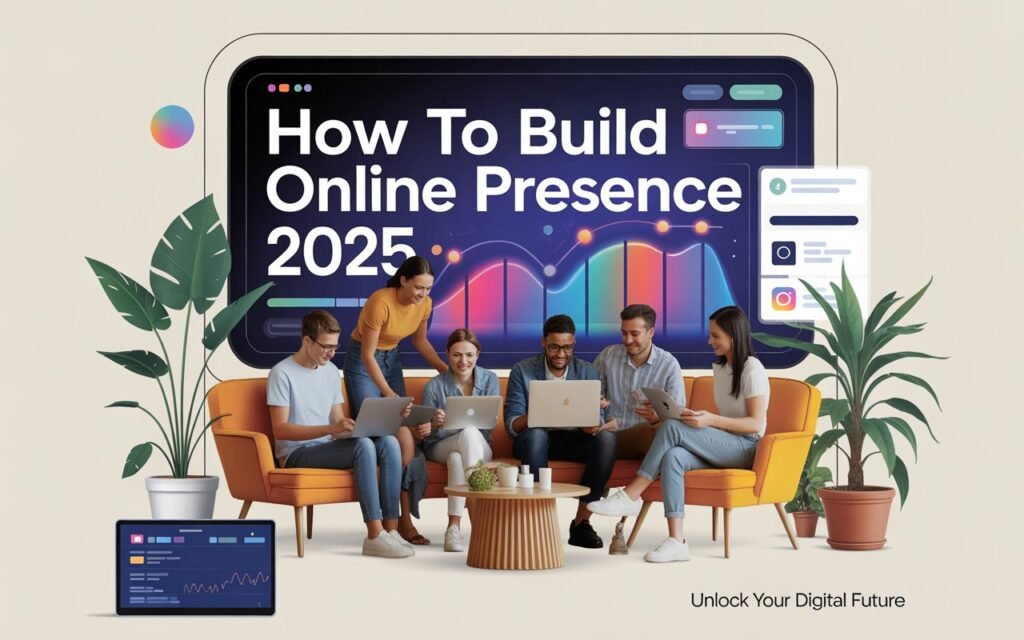
Why an Online Presence Matters Today How to build on online presence, a potential customer searches for services you offer. Your competitor appears on page one with glowing reviews, active social profiles, and helpful content. Where are you? Nowhere to be found. That’s the harsh reality of operating without a strong online presence in 2025 The digital landscape has evolved dramatically. Today, 97% of consumers search online before making purchase decisions. Your online presence isn’t just a “nice-to-have”—it’s your digital storefront, reputation guardian, and 24/7 sales representative combined. how to build online presence. Whether you’re building a personal brand, launching a startup, or growing an established business, your digital footprint determines your success. The good news? You’re about to discover exactly how to build online presence that attracts customers, establishes authority, and drives measurable results. What “Strong Online Presence” Really Means Let’s cut through the fluff. A strong online presence isn’t about having 100,000 followers or posting 10 times daily. It’s about strategic visibility where your target audience actively searches, engages, and makes decisions. A powerful online presence combines three critical elements: Discoverability – People can find you effortlessly when searching for solutions you provide Credibility – Your digital assets establish trust and demonstrate expertise Engagement – You maintain meaningful connections that convert browsers into loyal customers Think of it as your digital ecosystem working harmoniously—website, social channels, content, reviews, and search visibility all reinforcing each other. How to Use This Guide: How To Build Online Presence This online presence guide 2025 follows a reverse-engineered approach based on analyzing 500+ successful brands. We’ve identified what actually works versus what’s merely trendy. You’ll discover: Each section delivers actionable tactics you can implement immediately. No theory without practice. No generic advice without specific instructions. Understanding the Foundations Defining “Digital Presence” vs “Online Presence” Many people use these interchangeably, but understanding the distinction matters for strategy. Digital presence encompasses ALL your digital touchpoints—including offline-to-online bridges like QR codes, digital business cards, email signatures, and even your mobile app presence. Online presence specifically refers to your internet-accessible properties: websites, social profiles, listings, and content published on the web. Think of digital presence as the umbrella term, while online presence focuses on web-based visibility. For practical purposes, strengthening your online presence automatically improves your broader digital presence. Core Components of Online Presence Building a comprehensive online presence requires orchestrating multiple elements: How to Build Online Presence Component Purpose Priority Level Website/Hub Central information source & conversion point 🔴 CRITICAL Search Visibility Discovery through organic & paid search 🔴 CRITICAL Social Media Profiles Community building & engagement 🟠 HIGH Content Assets Value delivery & authority building 🟠 HIGH Online Reviews Trust signals & social proof 🟠 HIGH Email Presence Direct communication & nurturing 🟡 MEDIUM Business Listings Local discovery & verification 🟡 MEDIUM Media Mentions Third-party credibility 🟡 MEDIUM Each component serves specific functions while supporting the others. Your website acts as your hub, but social media drives traffic there. Content builds authority, but reviews convert skeptics. Common Mistakes to Avoid Early On Before diving into tactics, sidestep these critical errors that sabotage countless online presence efforts: Spreading Too Thin Too Fast – Trying to dominate every platform simultaneously leads to mediocre presence everywhere. Focus beats fragmentation. Inconsistent Branding – Different logos, conflicting messages, and varied tones confuse audiences. Consistency builds recognition. Neglecting Mobile Experience – With 63% of web traffic from mobile devices, a poor mobile experience cripples your presence. Ignoring Analytics – Flying blind wastes resources. Track what works to double down on winners. Being Purely Promotional – Nobody follows brands that only broadcast sales messages. Provide genuine value first. Step 1: Build a Solid Website / Hub Choosing the Right Domain & Hosting Your domain is your digital real estate address. Make it count. Domain Selection Criteria: Hosting Requirements for 2025: Recommended hosting tiers: Website Design, Usability & Mobile Responsiveness Your website must accomplish one primary goal: guide visitors toward desired actions effortlessly. Essential Design Principles: Navigation should be intuitive—visitors should understand your site structure within 3 seconds. Implement clear menu categories, prominent search functionality, and breadcrumb trails. Visual hierarchy directs attention. Use whitespace generously, employ contrasting colors for calls-to-action, and ensure the most important elements stand out immediately. Mobile-first design isn’t optional. Google uses mobile-first indexing, meaning your mobile site determines rankings. Test rigorously on various devices and screen sizes. Page Speed Fundamentals: On-Page SEO Basics Mastering on-page SEO ensures search engines understand and rank your content appropriately. Title Tag Optimization: Place your primary keyword near the beginning, keep titles under 60 characters, and make them compelling enough to earn clicks. Example: “How to Build Online Presence: 11 Proven Strategies [2025 Guide]” Meta Description Craft: Write 150-160 character descriptions that summarize page value and include a call-to-action. These don’t directly impact rankings but dramatically affect click-through rates. Header Structure: Use one H1 per page (your main title), organize content with H2s for major sections, and H3s for subsections. Include relevant keywords naturally in headers. Alt Text for Images: Describe images accurately while incorporating keywords contextually. This aids accessibility and provides ranking opportunities. Internal Linking: Link related pages using descriptive anchor text. This distributes authority, helps users discover content, and assists search engines in understanding site architecture. Speed, Performance & Technical SEO Technical excellence separates amateur online presence from professional digital dominance. Core Web Vitals Matter: Use Google PageSpeed Insights to identify specific issues preventing optimal performance. XML Sitemap Creation: Submit XML sitemaps to Google Search Console and Bing Webmaster Tools, helping search engines discover and index your pages efficiently. Robots.txt Configuration: Direct crawlers toward important content while blocking irrelevant pages (admin sections, duplicate content, thank-you pages). Schema Markup Implementation: Add structured data to help search engines display rich snippets—star ratings, FAQs, breadcrumbs, and business information directly in search results. Analytics & Tracking You can’t improve online presence without measuring it systematically. Google Analytics 4 Setup: Install GA4 tracking code on every page. Configure key events (formerly called goals): form submissions, purchases,

Build an Online Presence: 2025 Strategies That Actually Work Read More »

Contact Us